
BASEMENT WATERPROOFING * SANDUSKY, OH
Crawl Space Encapsulation in Sandusky, OH
An open crawl space over bare Sandusky clay is a permanent moisture source feeding the rooms above it. Encapsulation seals the space with a heavy vapor barrier across the floor and up the walls, seams taped and mechanically fastened, vents closed, and a dehumidifier added where the space needs one. The damp smell in the house goes away, the floors above stop feeling cold and clammy, and the framing stops taking on moisture it was never designed to carry.
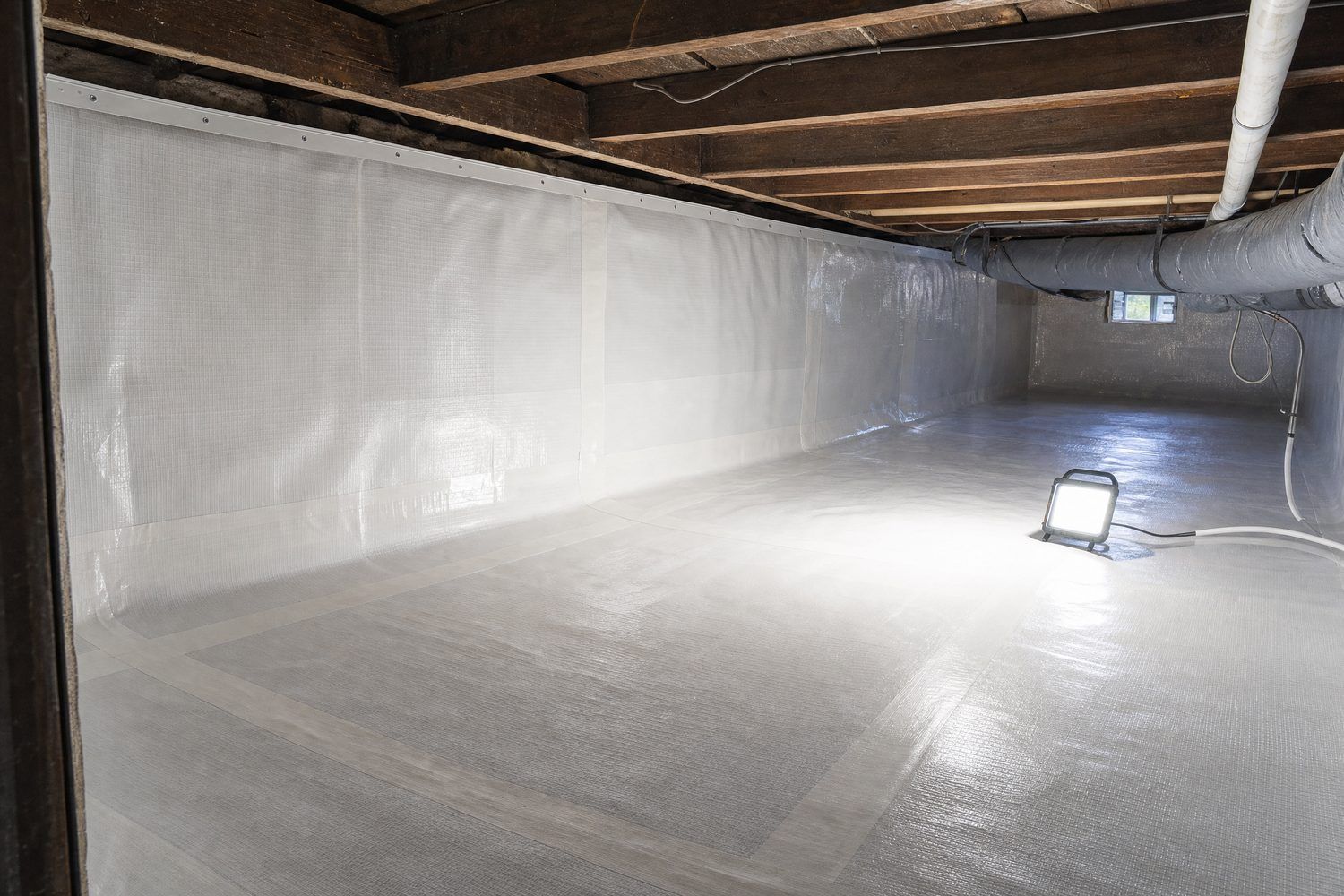
What crawl space encapsulation involves
We start by clearing the space — old fallen insulation, debris, and any standing water or wet soil. Where water pools we install drainage and a sump before anything is sealed, because encapsulating over standing water traps it underneath. Then a heavy reinforced polyethylene liner goes across the entire floor and is run up the foundation walls, terminated below the sill, and mechanically fastened rather than just glued. Every seam is taped, and penetrations for piers, posts, plumbing, and ducting are cut and sealed individually.
The foundation vents get closed and sealed. This is the part homeowners question most, because older building practice held that crawl spaces should breathe. In an Ohio climate that advice was wrong: in summer, warm humid outside air entering a cool crawl space condenses on the framing and ductwork, so venting actively adds moisture rather than removing it. Once the space is sealed we add a dedicated dehumidifier where the volume warrants it, and where the crawl space is heated or shares air with the house we insulate the walls. The result is a dry, conditioned space you could store things in.
When crawl space encapsulation is needed: signs and situations
Most of the signs show up in the house rather than in the crawl space itself:
- A musty or earthy smell in the rooms above that never fully clears, worst in summer
- Floors above the crawl space that feel cold, damp, or springy underfoot
- Bare soil visible in the crawl space, or a torn and displaced plastic sheet doing nothing
- Fiberglass insulation between the joists that has fallen down or is dark and sodden
- Mold or white fungal growth on joists, subfloor, or the sill plate, or rust on ductwork and pipes
- Standing water, damp soil, or condensation dripping from the underside of the floor
Get Your Free Quote
Why crawl spaces stay damp in Sandusky
Bare soil gives off moisture continuously. In Sandusky that soil is clay sitting over a naturally high water table near the lake, so it is rarely dry, and a crawl space floor with nothing over it evaporates water into the space every day of the year. That moisture does not stay put — it rises through the floor above by the stack effect, so a significant share of the air you breathe upstairs has passed through the crawl space first. The musty smell in the living room is coming from underneath the house.
Venting makes it worse in this climate, which is counterintuitive. On a humid Ohio summer day, outside air at eighty degrees and high humidity enters through the foundation vents, meets framing and ductwork sitting at sixty-something degrees, and condenses on those surfaces. The vents that were supposed to dry the space are delivering water to it. Add falling fiberglass insulation, which holds moisture against the joists once it sags, and the standard 1950s crawl space detail becomes a slow rot problem. That is why sealing and dehumidifying has replaced venting in this climate zone.
What affects the cost of crawl space encapsulation in Sandusky
We measure the space and quote one fixed figure. The variables are:
- Square footage of floor and the linear feet of wall the liner has to cover
- Headroom and access — a space you can crawl through costs far less in labour than one you belly through
- Clean-out required first, including old insulation removal, debris, and any standing water
- Whether drainage and a sump are needed before sealing, which is common where water pools
- Liner specification, and how many piers, posts, and pipe penetrations need individual sealing
- Whether a dehumidifier and wall insulation are included, and the power supply for the unit
Vapor barrier or full encapsulation — how to decide
A floor-only vapor barrier is a legitimate, cheaper option and it is the right call in some houses. If the crawl space is dry, has no standing water history, and the only issue is bare soil giving off moisture, laying a properly lapped and taped liner across the floor addresses most of the problem at a fraction of full encapsulation. It will not condition the space or stop humid summer air entering through the vents, but it stops the ground itself acting as an evaporator.
Full encapsulation earns its cost when there is visible mold or rot on the framing, when ductwork or plumbing runs through the space, when the smell has reached the living areas, or when summer condensation is dripping off the underside of the floor. Sealing the walls and vents and adding a dehumidifier is the only approach that controls humidity year-round rather than reducing one source of it. One thing we will not do is encapsulate over standing water or wet soil — if water is entering, drainage goes in first, otherwise the liner just hides it.
Our step-by-step crawl space encapsulation process
- STEP 1
Free on-site inspection — we go into the space, check for water, mold, rot, and measure humidity
- STEP 2
Written diagnosis and fixed itemised quote, stating whether drainage is needed before sealing
- STEP 3
Clear-out — debris, fallen insulation, and any wet material removed and taken away
- STEP 4
Drainage and sump installed first where water enters or pools, so nothing is sealed over standing water
- STEP 5
Reinforced liner laid across the floor, lapped, and run up the foundation walls
- STEP 6
Seams taped, liner mechanically fastened to the walls, and every pier, post, and pipe penetration sealed individually
- STEP 7
Foundation vents closed and sealed, wall insulation added where specified
- STEP 8
Dehumidifier fitted and set, humidity verified with a reading, access hatch sealed, and site left clean
Timeline and what to expect
One to three days for most Sandusky crawl spaces. A straightforward space with reasonable headroom and no clean-out is often a single day. Add a day where old insulation and debris have to come out, and another where drainage and a sump go in first. You can stay in the house throughout and there is no concrete work, so it is far less disruptive than basement drainage — the main impact is our crew moving in and out through the access hatch. Where a dehumidifier is fitted, we set it and take a humidity reading before leaving, then ask you to check it again after a fortnight so we know the space has actually dried down.
GOOD TO KNOW
FAQs
Should crawl space vents be open or sealed in Ohio?
Sealed. Older building practice said crawl spaces should breathe, but in this climate that advice does the opposite of what was intended. On a humid Ohio summer day, warm outside air enters the vents, hits framing and ductwork that are considerably cooler, and condenses on them. The vents are delivering moisture, not removing it. Sealing the vents and controlling humidity with a dehumidifier is the current standard for this climate zone.
Will encapsulation get rid of the musty smell in my house?
In most cases yes, and usually within a couple of weeks. The smell is airborne moisture and mold spores from the crawl space rising into the rooms above through the stack effect, so removing the moisture source removes the smell. The exception is where there is already established mold or rot in the framing or subfloor — that has to be treated directly, because sealing the floor beneath it does not remove what is already growing.
Do I need a dehumidifier as well as the liner?
It depends on the space. A liner stops the ground evaporating moisture upward, which is the largest single source. But once the space is sealed, whatever humidity is in there has no way out, and in a Sandusky summer that is often still too high. Where the space has volume, ductwork, or any history of condensation, a dehumidifier is what actually holds the humidity down year-round. We take a reading during the inspection rather than guessing.
Can you encapsulate a crawl space that gets standing water?
Not until the water is dealt with. Sealing a liner over wet soil or standing water traps it underneath, where it keeps evaporating against the underside of the liner and rotting anything it touches — and you cannot see it happening. Where water enters, we install drainage and a sump first, confirm the space stays dry, and then encapsulate. Any company willing to encapsulate over standing water is selling you a cover, not a repair.
Should I remove the old fiberglass insulation between the joists?
Almost always yes. Fiberglass in a damp crawl space absorbs moisture, sags away from the subfloor, and then holds that moisture against the joists — it stops insulating and starts causing rot. Where insulation is wet, dark, or falling down, we take it out as part of the clear-out. After encapsulation, insulating the foundation walls rather than the floor above is generally the better approach in a sealed space.
Get the damp out from under your house
Book a free on-site inspection. We go into the space, take a humidity reading, and tell you whether you need a floor liner or full encapsulation.