
OUR SERVICES
Basement Waterproofing Services in Sandusky, OH
We stop water getting into basements and crawl spaces across Sandusky and the Firelands — interior perimeter drainage and sump systems, foundation crack repair for both poured concrete and Sandusky's limestone walls, exterior membrane and French drains, and crawl space encapsulation. Every job starts with a free inspection and ends with a fixed price in writing. Which repair you need depends on where the water is actually coming from, and that is the first thing we work out.
Interior Drainage & Sump Pumps
A perimeter drain cut into the basement floor, bedded in washed stone and feeding a sealed sump basin that discharges away from the house. The standard answer to a high water table, and the most over-sold service in this trade — we only recommend it when the water is genuinely coming up rather than in.
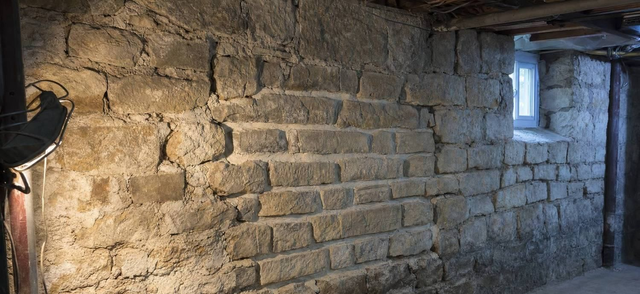
Foundation Crack Repair
Polyurethane injection for cracks in poured concrete walls, and lime-compatible repointing for the limestone foundations Sandusky has more of than any other city in Ohio. Two different walls, two genuinely different repairs — injection does
nothing on stone.
Exterior Waterproofing & French Drains
Excavation down to the footing, waterproof membrane and drainage board against the wall, and perforated pipe bedded in washed stone. It costs more because of the digging, but it stops water before it ever reaches the foundation rather than managing it afterward.
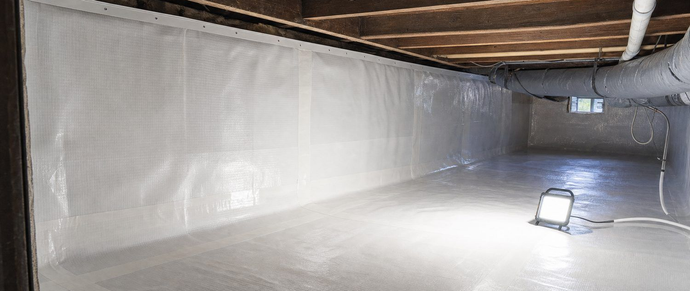
Crawl Space Encapsulation
A sealed vapor barrier across the floor and up the walls, seams taped and mechanically fastened, with the vents closed and a dehumidifier where the space needs it. Stops ground moisture rising into the rooms above and takes the damp smell out of the house.
Basement Waterproofing Cost
Real Sandusky price bands for every repair we do, what moves the number up and down, and why we quote one fixed figure in writing instead of a range that drifts upward once work starts.
SIGNS TO WATCH FOR
When you need basement waterproofing
The obvious sign is standing water, but most Sandusky basements tell you long before that. Watch for a white chalky crust on the block or stone, which is efflorescence — mineral salts left behind by water passing through the wall. Watch for a damp smell that never fully clears, rust forming at the base of appliances or steel posts, paint or whitewash flaking off in sheets, and a crack in the foundation wall that looks wider than it did last spring. If your sump pump runs when it has not rained, or does not run when it pours, something is wrong with either the pump or the drain feeding it. And if the water only ever appears during heavy rain, that points somewhere different from a high water table — often to surface water or a storm sewer surcharge.
Get Your Free Quote
No obligation. No pressure. We reply within one business day.
ROOT CAUSES
Why basements take on water in Sandusky
There are three causes here, and it is common to have more than one at once. The first is the water table: Sandusky sits on the Lake Erie shoreline over clay soils that drain slowly, and Ohio's Department of Natural Resources states plainly that a high water table is unsuitable for basements. The second is rainfall intensity, which is increasing — on July 6, 2026, Kelleys Island took ten to fifteen inches, peaking at five inches an hour, and one homeowner's sump pump moved 36,000 gallons overnight and was still running the next morning. The third is the one almost nobody knows about, and it explains why some Sandusky basements flood when the ground is not especially wet: many older in-town houses have a perimeter foundation drain tied directly into the municipal storm sewer. When that sewer surcharges and the basement floor sits below street level, city water pushes backward through the drain and comes up inside the house. The homeowner assumes groundwater. It is the street, and the correct fix is a backwater valve rather than a bigger pump.
BUDGETING
What affects the cost of basement waterproofing in Sandusky
The biggest driver is whether the work happens inside or outside. Interior drainage means cutting and removing a channel of concrete floor around the perimeter, which is disruptive but predictable. Exterior work means excavating to the footing, which costs considerably more and depends on how much of the wall we open, what is in the way — a deck, a driveway, mature plantings — and whether we need a right-of-way permit. After that: linear feet of wall treated, how far the discharge line has to run to daylight or a legal connection, whether a backwater valve is needed, whether the foundation is poured concrete or limestone requiring lime-mortar repointing rather than injection, and access, because a basement reached only through a narrow interior stair costs more in labour than a walkout. Permits and inspections are included in our number rather than added later.
DECISION GUIDE
Spot repair or full system — deciding the right path
A spot repair is the right answer more often than the industry admits. If water enters at one identifiable point — a single crack, one rod hole, a gap around a pipe penetration — sealing that point fixes it, and the honest price is a few hundred dollars rather than several thousand. The same is true when the real cause is outside the house entirely: a downspout discharging against the foundation or ground sloping back toward the wall can be corrected for almost nothing, and we will tell you so. A full system becomes the right choice when water enters at multiple points along the wall, when it comes up through the floor or the floor-wall joint rather than through the wall, when the water table genuinely rises above the slab in wet months, or when a stone foundation's mortar joints have eroded along their whole length rather than in one spot. The purpose of the inspection is to establish which of those you have before anybody quotes.
WHY US
Why choose our team for basement waterproofing in Sandusky
Most companies advertising basement waterproofing in Sandusky are franchises dispatching crews from Toledo or Cleveland. We are based here, which matters more in this city than in most, because Sandusky's foundations are not what an out-of-town crew expects. Our process is the same on every job: a free on-site inspection inside and out, a written diagnosis of where water is entering and why, a fixed itemised price that does not move, permits pulled by us, our own crew on site rather than a subcontractor, and a water test with you watching before we leave.
- Licensed and insured Ohio contractors — we pull the sewer and flood plain permits ourselves
- Fixed-price written quotes with clear timelines, not ranges that drift upward
- Local Sandusky references and job photos available on request
- Water-tested on completion, cleaned up, and a warranty that transfers to the next owner
GOOD TO KNOW
Frequently Asked Questions
How long does basement waterproofing take in Sandusky?
Interior perimeter drainage with a sump pump is normally two to four days on an average Sandusky basement. A single crack injection is a few hours. Exterior excavation with membrane and French drain runs three to six days depending on how much wall we open and what the weather does. Crawl space encapsulation is one to three days. You get a written schedule with the quote.
Do you pull the permits?
Yes, and on some of this work you legally cannot. Sandusky requires a sewer permit for the installation, repair, or replacement of any storm or sanitary lateral, and only a licensed contractor can obtain one. The same applies to excavating in a city right-of-way. If your property is in a mapped flood plain area, a flood plain permit must be issued before a building permit. Permit costs are in our quote, not added afterward.
What if you find mold or rot once you open things up?
We show you before touching it. Surface mold on masonry usually comes off with the water source removed and the area cleaned. Rot in framing, a sill plate, or a joist end is a different matter and needs a carpenter — we will tell you plainly if that is outside what we do and what it will take. What we will not do is bury it behind a vapor barrier and hope, which is how a lot of encapsulation jobs go wrong.
Can you fix a leak without installing a whole system?
Often yes, and we would rather do that. A single crack, a rod hole, or a gap where a pipe passes through the wall can be sealed as a spot repair for a few hundred dollars. If the real cause is a downspout dumping against the foundation or the grade sloping toward the house, the fix costs almost nothing and we will say so. A full system is for water entering at multiple points, coming up through the floor joint, or a genuinely high water table.
Do you offer financing or phased work?
Larger exterior jobs can be staged — treating the wall where water actually enters first and returning for the remaining elevations later. That spreads the cost without leaving the main problem unaddressed. Ask when we quote and we will lay out the sensible order.
Ready to get your basement dry?
Book a free on-site inspection. We check the foundation inside and out, the grade, and the downspouts, find where water is actually entering, and give you one fixed price in writing.